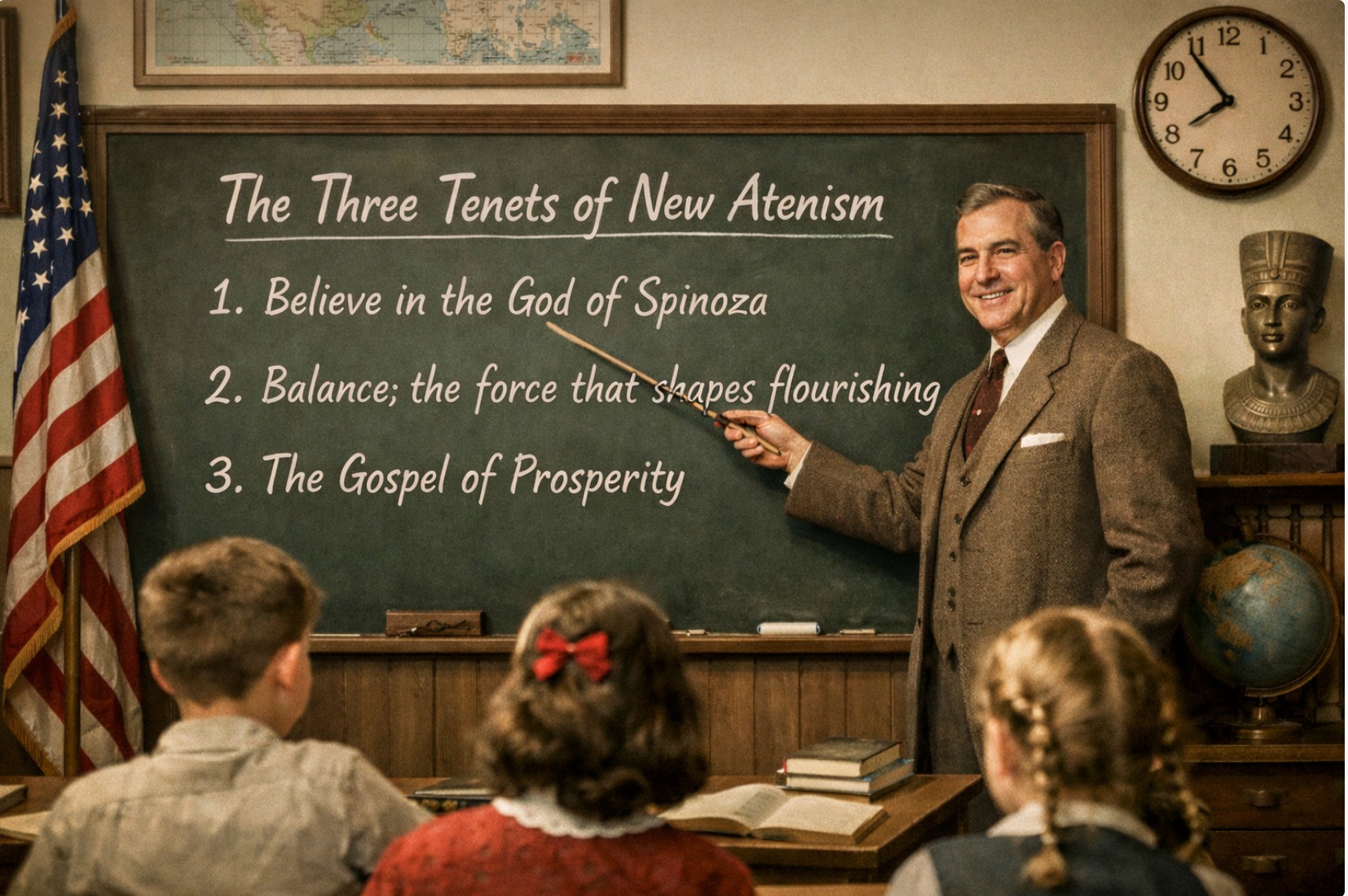
What follows is a list of books in roughly the order of their impact on New Atenism:
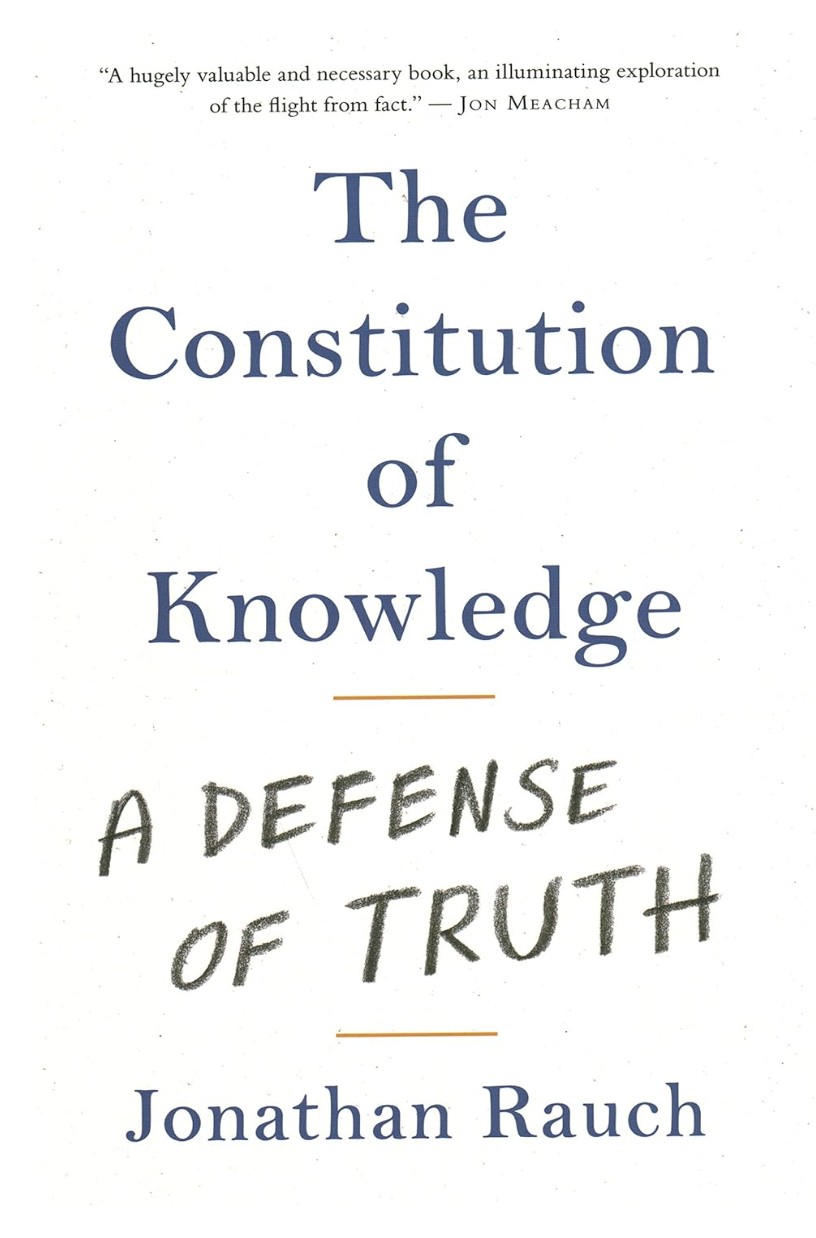
“The Constitution of Knowledge” – Jonathan Rauch Brookings Institution Press, 2021.
I’m not sure I’ve ever read a book where on almost every page I found myself wanting to drag my highlighter across at least one passage. Rauch’s constitution of knowledge is rulebook for collective cold reason. It defines how members of “the reality-based community” reason together to arrive as close to the truth as humanly possible.
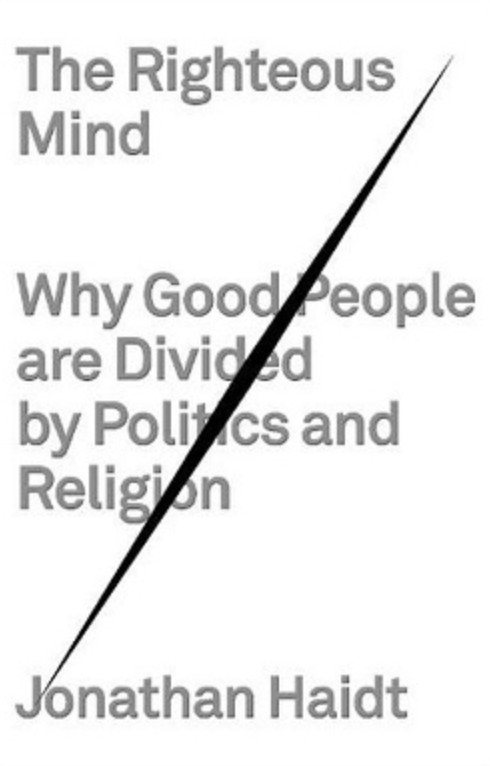
“The Righteous Mind” – Jonathan Haidt Pantheon Books 2012.
Any of the first six books listed here could have been at the top. Haidt’s updating of the relationship between reason and emotion/instinct/intuition with contemporary neuroscience and psychology provides a useful framework for developing self-knowledge. His analogy of reason being a rider atop our emotional elephant is, for me, the most relatable way to view Kahneman’s type 1/type 2, Baggini’s hot/cold reason, Gladwell’s blink etc. (which is why I shamelessly adopted and built upon it). Using reason to control instinct and emotion is the process of becoming a better elephant rider.
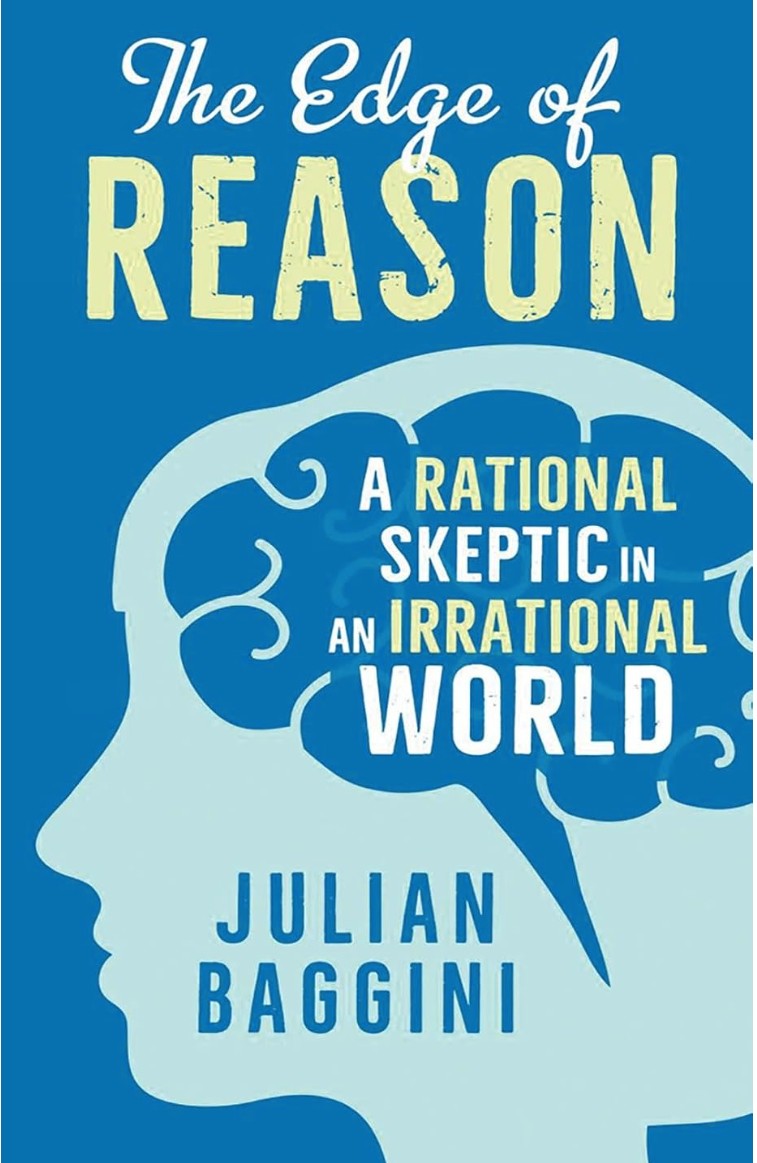
“The Edge of Reason” – Julian Baggini Yale University Press 2016.
This book really helped to clarify reason’s power and potential, but also its limitations. Baggini’s “hot and cold reason” are central to New Atenism’s four flavors of reason that make up reason’s eco-system.
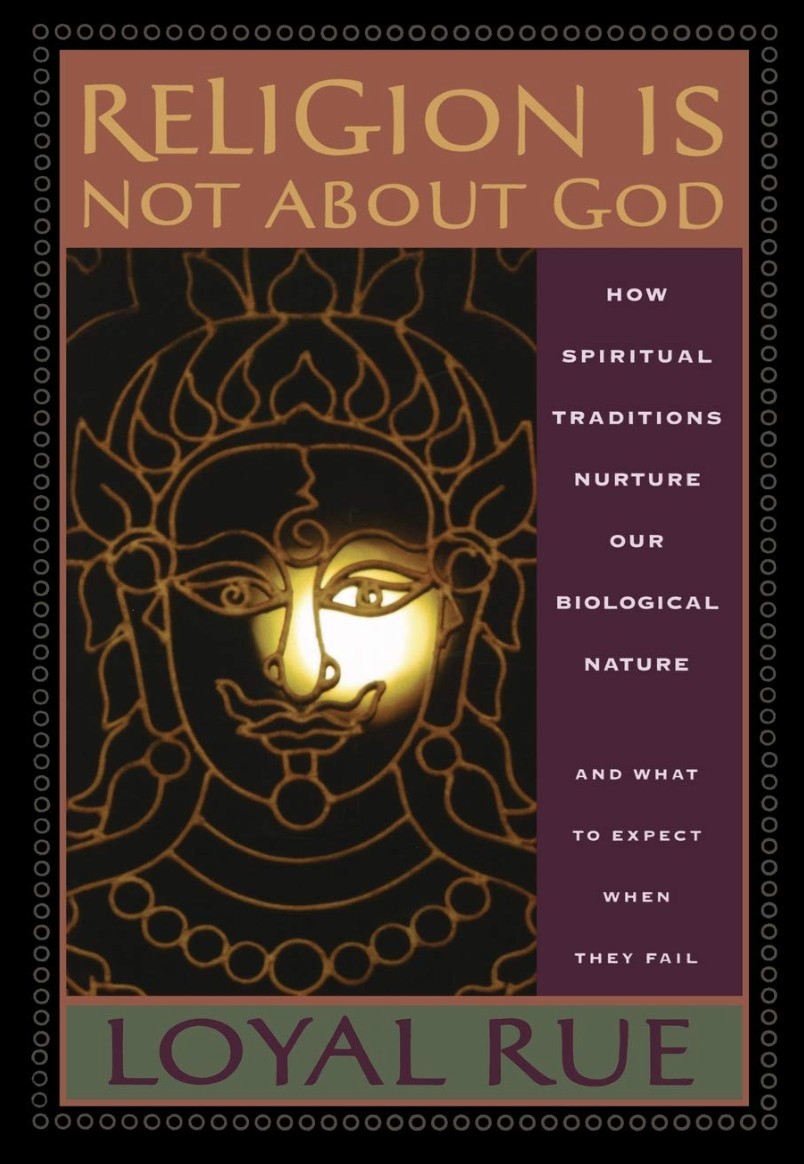
“Religion is Not about God: How Spiritual Traditions Nurture Our Biological Nature and what to Expect when They Fail” Loyal D. Rue Rutgers University Press, 2001.
This book has to be near the top of the list, as it’s what convinced me that New Atenism should be a religion rather than a philosophy (great news for me, since the qualifications for founding a religion are far less stringent). I draw from Rue’s model of religion in the book, and he demonstrates how five very different traditions—Christianity, Islam, Hinduism, Buddhism, and Confucianism—all conform to it. His inclusion of Confucianism, which many view more as a philosophy than a religion, both expanded and clarified what religion is for me.
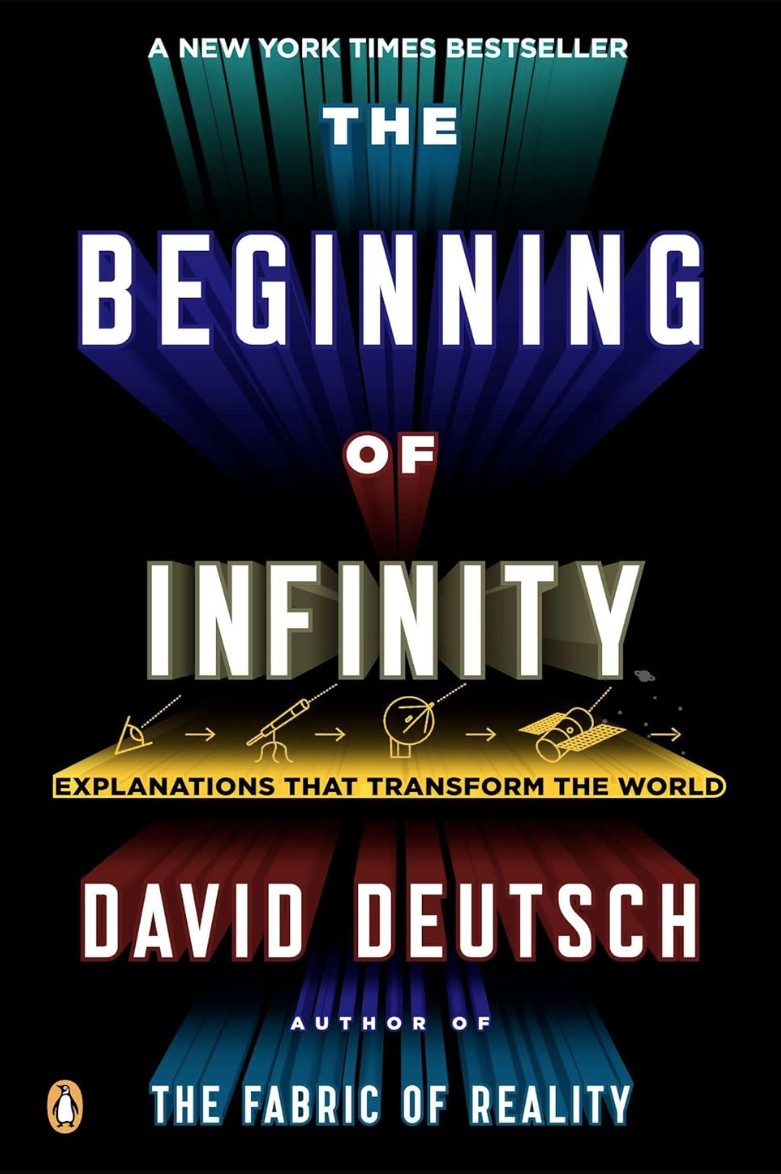
“The Beginning of Infinity” David Deutsch Penguin Publishing Group 2011.
This book not only cemented the definition of knowledge as being our “current best explanation” in my mind, but the entirely of the process of reason. It is through continually “looking for errors” that we build better and better explanations and facilitate human progress. This book’s belief in knowledge’s proven ability to facilitate progress embodies an optimism that is heartening and compelling and core to New Atenist philosophy.
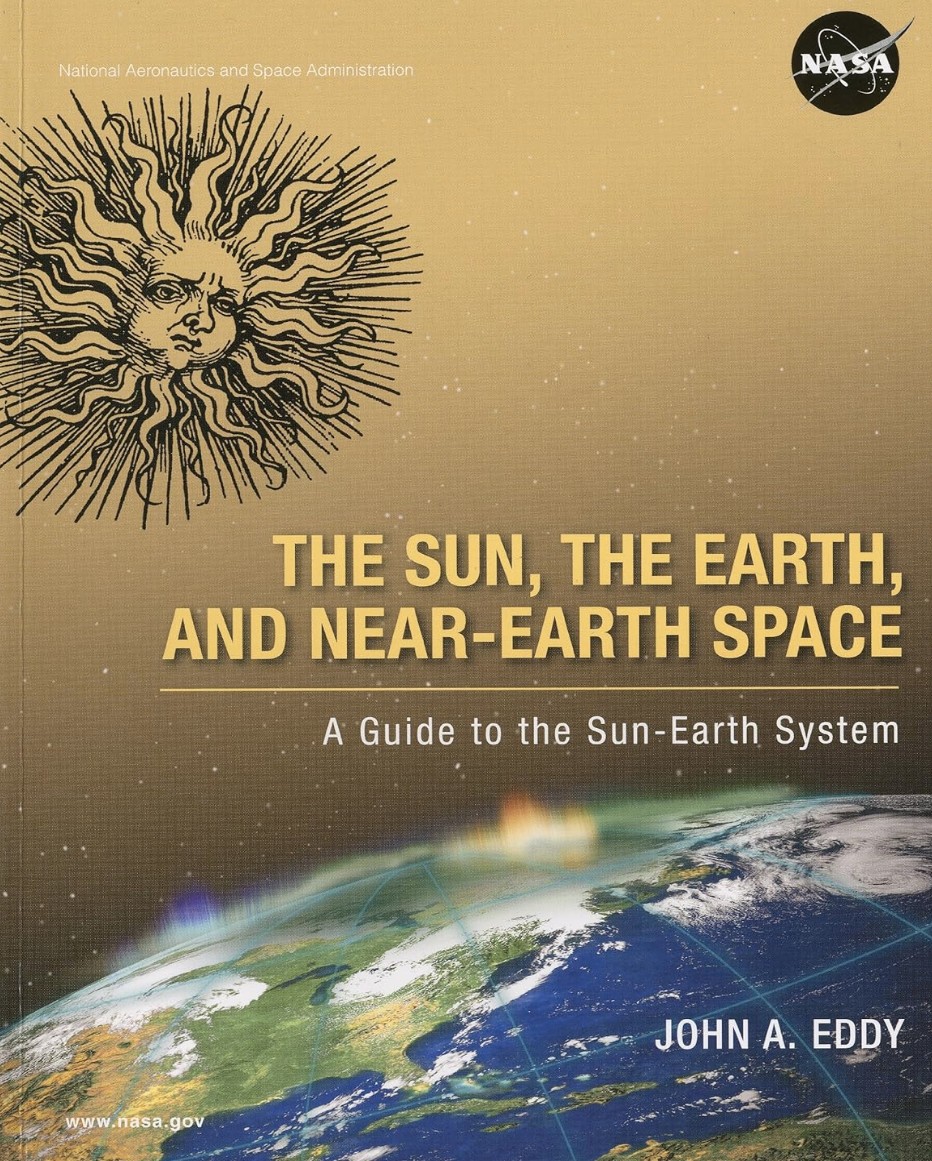
“The Sun, the Earth, and Near-Earth Space: a Guide to the Sun-Earth System – Comprehensive Information on the Effects of Space Weather on Human Life, Climate, Spacecraft” — Publisher: National Aeronautics and Space Administration (NASA), World Spaceflight News · 2017.
This book, finished posthumously by Eddy’s wife, was surprisingly moving given its academic nature. Eddy’s passion for the life-giving miracle of radiant solar energy balanced by near-Earth space shines through on every page. It was this book, more than any other, that made me aware of, awed by and grateful for all that this balance brings us. The veneration of Aten is an awareness of that power, gratitude for that balance and a commitment to preserve it. This book doesn’t wag its finger at humanity for its role in climate change, rather it invites all to revel in the life-giving wonders of the sun and near-Earth space.
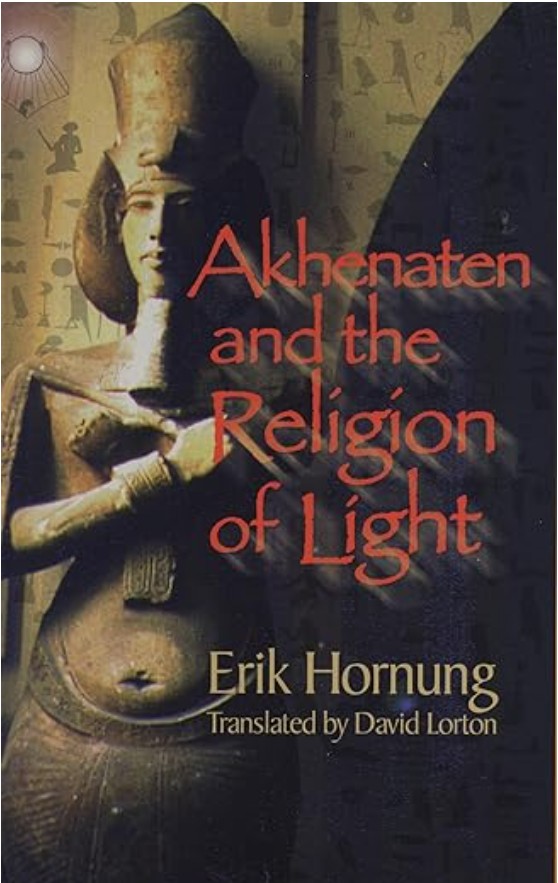
“Akhenaten and his Religion of Light” – Erik Hornung Cornell University Press 2001.
Many academics, be they historians, archaeologists or psychologists, dismiss Akhenaten as a lunatic. While Dr. Hornung doesn’t ignore the many ways in which Akhenaten was a lousy pharaoh, he sheds light (sorry) on the remarkable ways Atenism was ground-breaking and prophetic. That Aten, and more specifically its rays, were seen as the power that brought life to our world and not an arbiter of morality and that Aten wasn’t anthropomorphized, or zoomorphized were all revolutionary ideas that reason has subsequently revealed to be true. In addition, Dr. Hornung was clear-eyed about the nonsense Akhenaten spouted and this balanced approach helped me to put the “new” in New Atenism.
“Transcend” Scott Barry Kaufman TarcherPerigee 2020.
This book is just a great read. Partly a fascinating biography of a giant in psychology, Abraham Maslow, part a relevant and clear update of Maslow’s work and part self-help/self-knowledge manual. Kaufman’s reimaging of Maslow’s hierarchy is foundational to New Atenism’s process of using reason to build self-knowledge and progress in your own life.
“The Ego Trick” – Julian Baggini Yale University Press 2011.
This is the best book I’ve read on consciousness. Baggini makes a strong, evidence-based case that consciousness is a result of brain function, thus solving what philosophers call “the easy problem of consciousness.” The “trick” is how our minds assemble the sensory information, emotion, instinct and memories, which all come from different parts of brain at different times, to create the illusion of a single, continuous entity, a self. He then goes on to say that while we haven’t figured out the “hard problem; why we have consciousness, or whether or not dogs, cats, horses or beavers do too, we can rest assured that any current explanation, particularly mystical or supernatural ones, are all but certain to be wrong.
“The Ego Tunnel: The Science of the Mind and the Myth of the Self” – Thomas Metzinger Basic Books, 2009.
While this book covers very similar ground to Baggini’s “The Ego Trick,” and reaches similar conclusions, it dives much deeper into the supporting neuroscience. I recommend both books, but Baggini’s is more targeting towards a general audience and Metzinger more academic—or least geekier.
“Enlightenment Now: The Case for Reason, Science, Humanism, and Progress” – Steven Pinker Penguin Books Limited/Viking 2018.
While this book goes over some of the same issues and updates a lot of the data presented in his most famous book “The Better Angels of Our Nature,” it is, in my opinion, a better book. Pinker, as always, provides copious and compelling statistical support for his plea for a new Enlightenment, a new age of reason—hear, hear !
“Age of Revolutions: Progress and Backlash from 1600 to the Present” — Fareed Zakaria Penguin Books Limited, 2024.
This is a terrific book about progress that clearly illustrates the problems with who gets left behind when huge cultural/societal transformations take place. From The Netherlands in the seventeenth-century to the French Revolution to,the Industrial Revolution, Zakaria provides a great background for the current globalization/technology we’re still in the middle of.
“Nexus: A Brief History of Information Networks from the Stone Age to AI” – Noah Yuval Harari Vintage Publishing 2024.
This remarkable book provides a comprehensive history of the information and communication tools humans have developed. All this serves as background for the book’s key message; AI is a totally new kind of information system which has unparalleled risk as well as unparalleled possibilities. The light bulb this book set of for me is that for the first time in human history, we’re bringing non-human intelligence into the process of reason.
“A Book Forged in Hell Spinoza’s Scandalous Treatise and the Birth of the Secular Age”– Steven Nadler Princeton University Press 2011.
This book, and the next two, are my Spinoza trilogy (but could also be called my “help me, I fell down trying to read “Ethics” and I can’t get up” trio). While Nadler’s “Think Least of Death: Spinoza on How to Live and How to Die” and “Spinoza A Life” are great, and probably better known, I found this book to be both informative of Spinoza’s philosophy and a great read. One of the challenges of reading books on philosophy for me is the emphasis that is put on the where a particular philosophy fits into context, sometimes over how useful that philosophy might be to the reader. In this book, Nadler deftly navigates this balance, weaving in Spinoza’s views on living a meaningful life which site in stark contrast to the “bronze-aged peasant” (yeah, that’s Hitchens) perspectives of his accusers.
“Spinoza’s Religion A New Reading of the Ethics” — Clare Carlisle Publisher: Princeton University Press 2021
This book is the ying to Nadler’s yang. Where Nadler sees Spinoza as a rationalist, he once wrote an essay calling him an atheist, Carlisle presents him as a thinker who redefines religion by integrating it with philosophy. Carlisle argues that Spinoza does not seek to abolish religion but to transform it, proposing a vision where religion is not about adherence to specific doctrines or institutions. Carlisle portrays Spinoza as offering an alternative vision of religion—one that is inclusive, philosophical, and centered on the transformative understanding of being intrinsically connected to God. Carlisle’s reading invites a reconsideration of the “Ethics” not as a secular or anti-religious text, but as a profound exploration of a redefined, virtue-based spirituality. My claim that Spinoza didn’t reject the existence of God but rather used reason to bring God into the reality-based community puts me more in her camp. This book play a significant role in coming to the belief that reason could not only be compatible with a religion, but fundamental to it.
“Pantheologies Gods, Worlds, Monsters” — Mary-Jane Rubenstein · 2018 Columbia University Press.
This book helped me to understand why Pantheism has been such a dirty word historically as well as reconcile my own problems with it. While historically, it’s been viewed as just putting a fig leaf (see what I did there?) on atheism, I had the opposite problem—that many self-proclaimed pantheists seem to believe there is some sort of agency and benevolence in nature. The “everything” view of God, including all that we don’t or can’t know, is clearly expressed here. It was this book that got me to put the capital “N” in the Nature that is synonymous with God.A Book Forged in Hell Spinoza’s Scandalous Treatise and the Birth of the Secular Age”– Steven Nadler · Princton University Press 2011
“Tiny Experiments” Anne-Laure Le Cunff Publisher Profile 2025.
This book is an extremely well thought out guide for how to progress in your life. By addressing issues in your life with a curious, scientist mindset, self-discovery becomes a series of, well, tiny experiments, rather than big audacious goals, which are rarely achieved. The image below alone is worth the price of the book. Favorite quote: “The problem with procrastination isn’t that you’re lazy. It’s that you shot the messenger.”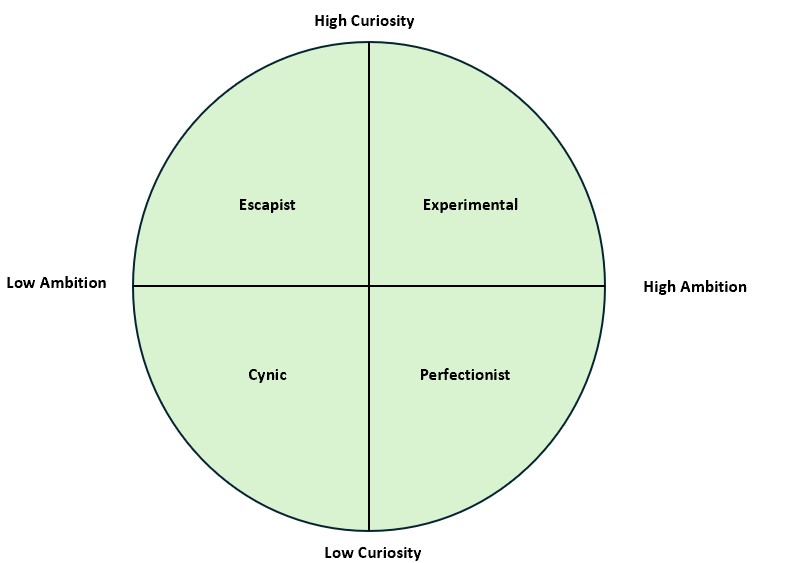 “
“
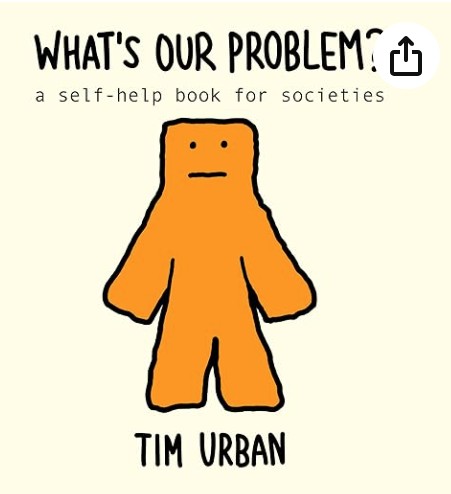
“What’s Our Problem?: A Self-Help Book for Societies” — Tim Urban Publisher Wait, But Why? 2023.
Don’t let the goofy stick figure illustrations and smart aleck tone fool you, there is some serious meat on these bones. Urban lays out how we got so polarized and what we can do about it. Great book.