Reasons and Reason
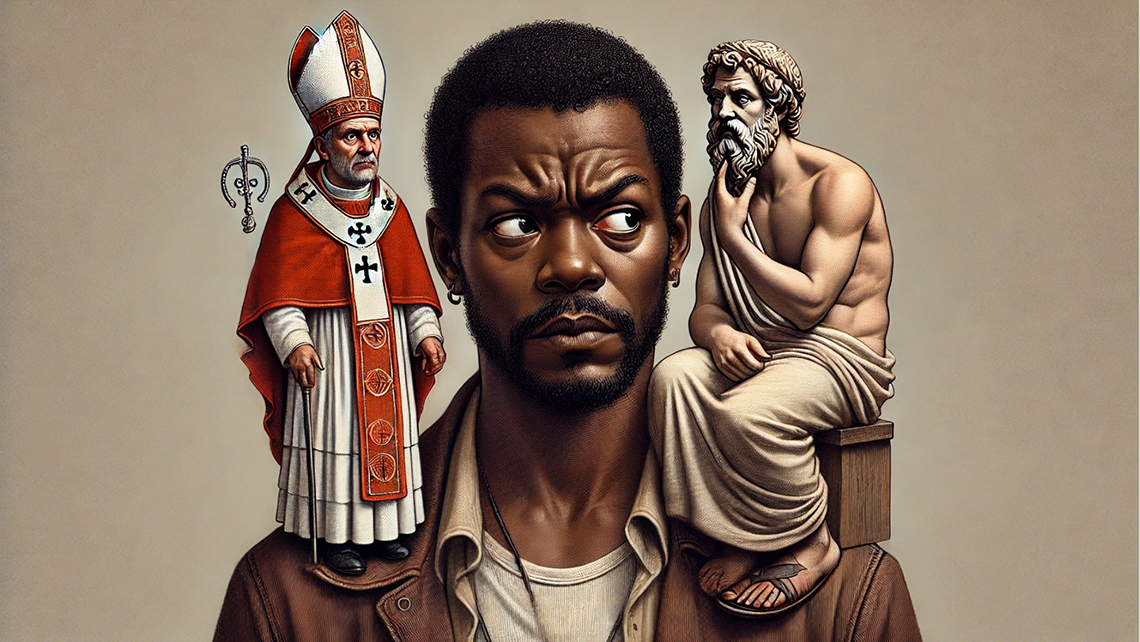
Reason is the worst way to find the truth except for all the other ones[1].
Around 300 years ago, the Enlightenment ushered in a new age, where reason was given sovereignty over authority, primarily the authority of monarchs and the church. This set off the explosive, and ever-accelerating, growth of knowledge that built the advanced civilization we’re so fortunate to live in. This was a turning point for our species, where after hundreds of thousands of years of painstakingly slow progress, we began to move forward more dramatically. There is some quibbling about the Enlightenment’s start date. Some prefer as early as the 1630’s when Rene Descartes said that to seek truth one should “as far as possible, doubt all things,” others as late as the 1715 death of Louis XIV. November 28, 1660, the founding date of the Royal Society in London is also a popular choice as their motto, “Nullis in verba” (take no one’s word), perfectly captures the soul of the Enlightenment. Either of the 17th century dates would get my vote because questioning everything, especially the quickly attained and tightly held beliefs that come from authority or our own assumptions, is the special truth-finding sauce in the process of reason.
The Enlightenment is also called the age of reason, but humans didn’t suddenly learn to reason in the 17th century, it has always been our superpower. Primitive humans used reason to develop knowledge, but it was limited to the evidence they could acquire from direct experience. For example, seeing their fellow hunters get stomped to death led to the development of spears which could be thrown from a safe distance. When seeking answers to questions for which no evidence existed, such as “How did humans come into being?”, “How were the Earth, moon, sun and stars created?”, “Why is there a night and a day?”, “Why do people die and what happens to them after they do?” they turned to mythology. The created stories of creator gods imbued with human emotions like desire, vanity, anger and jealousy. These gods became players in dramas which provided satisfying explanations for these troubling questions.
The urge to have a reason for everything is so strong that when we don’t have enough evidence to use reason to produce a satisfying one, we either make one up or accept a reason someone else made up. Even with the incredible amount of evidence and knowledge we’ve collected, this urge is still with us. It can be found across a spectrum of people who possess a deep belief in the power of reason to people with little or no belief in it.
“Reason” in its verb form means to think in a logical manner, but reason is also a noun, meaning a basis or cause for some belief, action or event. The difference between the two forms is vast and important. Something deep within us demands a reason for everything because our brains are programmed to quickly create beliefs which we use to navigate and make sense of our world. Psychologist and science historian Michael Shermer in his book “The Believing Brain” explains it this way:
“The brain is a belief engine. From sensory data flowing in through the senses the brain naturally begins to look for and find patterns and then infuses those patterns with meaning. We can’t help it. Our brains evolved to connect the dots of our world into meaningful patterns that explain why things happen. These meaningful patterns become beliefs, and these beliefs shape our understanding of reality.[2]”
This human thirst for explanation-providing patterns is big business. Astrology, with its vague and flexible descriptions of personality types and predictions of future events, provides a framework of patterns believed by a quarter of all Americans, and more than one third of those under 30. Despite the total lack of evidence that astrology has any predictive ability, it represents a $12.8 billion market which is projected to grow to $22.8 billion by 2031. While this is still dwarfed by the $350 billion religious organization market, it’s growing fast. Astrology offers solace to pattern-seekers who have become disenchanted with organized religion. This is another way our belief engines quickly adopt and fiercely cling to patterns that facilitate comforting self-delusion.
Evolutionary psychologists Robert Trivers & William von Hippel believe self-deception is naturally selected. Their conjecture is that self-deception evolved alongside the ability to deceive because as our capacity for identifying when someone is deceiving us, what gamblers call “tells”, improved, believing a deceit became the best way to sell it. Their paper has been supported by a number of studies which demonstrate how self-deception can enhance one’s social and economic position and how believing the deceiver takes less brain power (cognitive load) than refuting the deceit. So not only is believing your own bullshit the best way to sell it, believing the bullshitter requires less brain power than refuting them.
Accepting the word of an authority is very appealing as it provides that goddamn answer much more quickly than the process of reason does and, as we learned above, requires less brain power. Many of our beliefs are established by the authority figures in the environment we were raised in. In fact, that environment, as well as your current social group, are themselves authorities. There is solid research which supports the conjecture that adherence to a social group’s beliefs is a leading factor in what we profess to believe[9]. Put that on top of our innate capacity for self-deception and it’s easy to see why once beliefs are formed, we tend to gravitate towards authorities which confirm those beliefs and away from evidence that refutes them. This is becoming ever easier. No matter how whacky your belief, there is a confirming “authority” out there Google and social media algorithms will serve up to you as well as introduce you to other like-minded people to become buddies with.
You might be chuckling right now thinking of someone you know who clearly believes their own bullshit but it’s likely that the biggest bullshitter in your life is you. Those powerful belief engines of ours serve up reasons into our consciousness like a short order cook on amphetamines and once a belief is formed, it takes way less brain power to continue to believe than to challenge it. In other words, once you have a reason, it’s difficult to reason yourself out of it.
Our belief engine brains make our allegiance to the noun form of reason innate. Reasons that confirm our biases, and authorities confirming those biases, are easily found. We struggle far more with the verb form, reasoning, despite it being the engine of human progress. Reasoning often demands we accept conclusions which force us to abandon reasons we’ve attached ourselves to. Another big reason we prefer the noun form to the verb is certainty. When one adopts a reason, the matter is settled—that’s the reason. Accepting a reason, whether from an authority or your own assumptions, also allows you to avoid having to be humble about the level of your own knowledge. We find It easier to believe we know than admit we don’t. Reasoning is painstaking and more often produces probabilities—the reasons most likely to be valid—than certainties, frustrating our impatient, “just-give-me-the-goddamn-answer-I-want”, belief engines.
Accepting the word of an authority is very appealing as it provides that goddamn answer much more quickly than the process of reason does and, as we learned above, requires less brain power. Many of our beliefs are established by the authority figures in the environment we were raised in. In fact, that environment, as well as your current social group, are themselves authorities. There is solid research which supports the conjecture that adherence to a social group’s beliefs is a leading factor in what we profess to believe. Put that on top of our innate capacity for self-deception and it’s easy to see why once beliefs are formed, we tend to gravitate towards authorities which confirm those beliefs and away from evidence that refutes them. This is becoming ever easier. No matter how whacky your belief, there is a confirming “authority” out there Google and social media algorithms will serve up to you as well as introduce you to other like-minded people to become buddies with.
As we saw in my last blog post there is third path to either accepting authority or spending decades becoming a true domain expert. You can lean into the power of reason. Our progress as a species depended upon, and continues to depend upon, people employing reason collectively to develop and verify knowledge. Believe in the power of reason and you can leverage all that expertise and get all those brilliant people to work for you! Right now, millions of experts around the world are feverishly working, and checking each other’s work, to acquire new knowledge to present to you. My next blog post will define and describe the four types of reason.
[1] Apologies to Winston Churchill for this paraphrase of his famous quote about democracy.
[2] Shermer, Michael (2011-05-23T23:58:59). The Believing Brain. Henry Holt and Co.