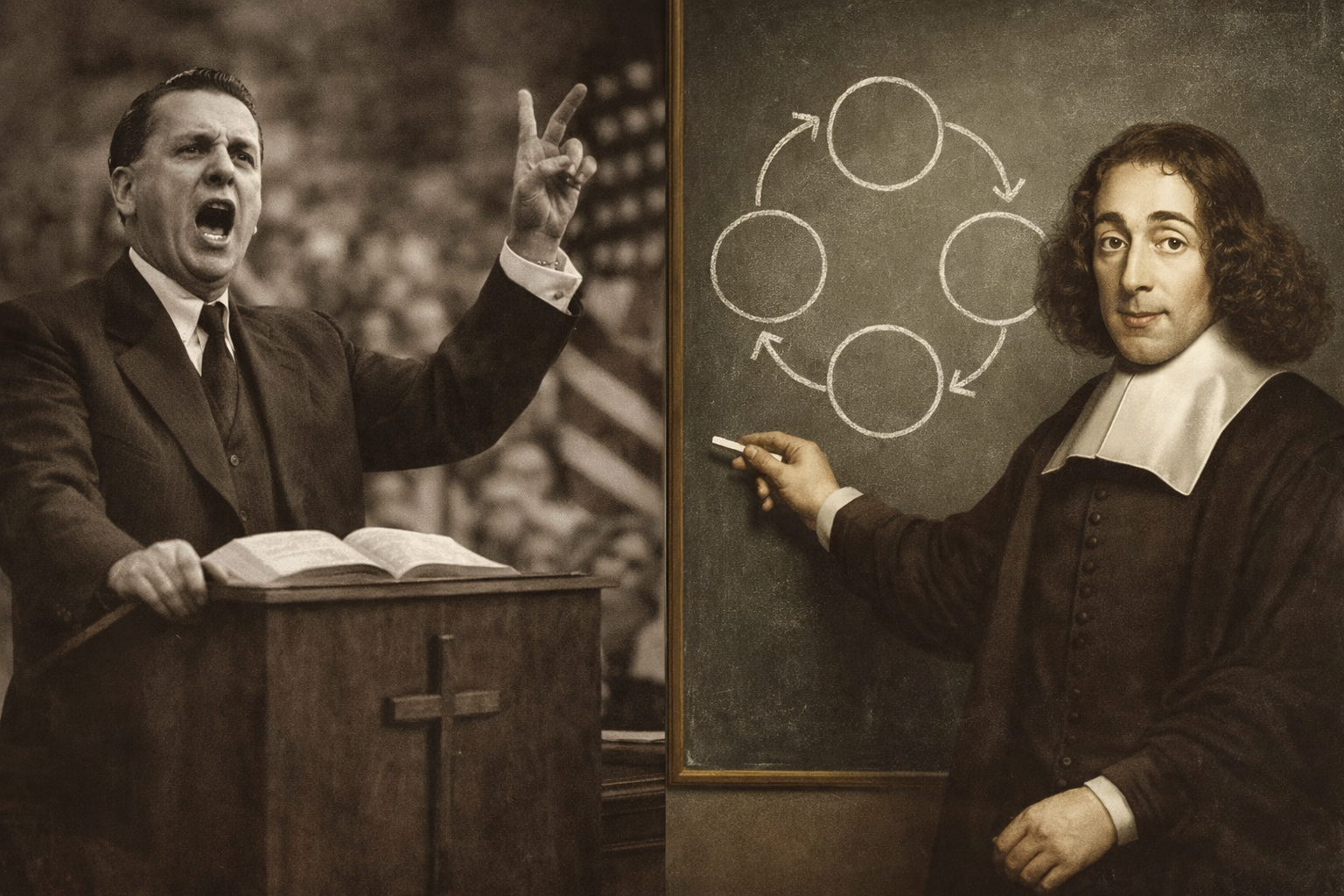
In a philosophy built on reason, even the name of an idea must earn its place.
Upon release, one of the most misunderstood concepts in New Atenism was The Gospel of Prosperity. While my attempt to reclaim the term from televangelist con artists may have been noble, for a new work from an unknown author, the burden of explaining “my” version proved too heavy.
I also came to see that my use of the term was influenced by the very tribal instincts my book aims to move beyond. It was something of a holdover from my more strident atheist days and sits uneasily with the more inclusive and pluralistic perspective I’ve since adopted. While the excesses of televangelists are easy to condemn, the motivations of their followers deserve more empathy than dismissal.
More fundamentally, the word gospel suggests doctrine—even dogma—which runs counter to New Atenism’s commitment to reason and criticism. The concept itself isn’t something to be believed; it’s something to be observed.
And the graphic makes that clear. It’s not a proclamation—it’s a process. A cycle. A feedback loop of reason, progress, and trust.
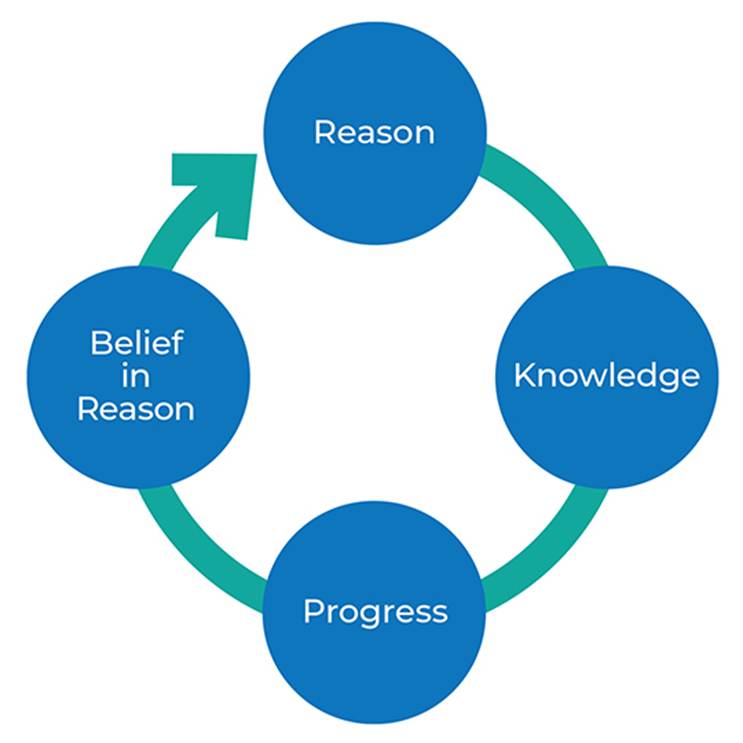
So “Gospel” is out. “Cycle” is in.
But what about prosperity? The term is closely tied to material wealth—houses, income, comfort. While I intended a broader meaning that included inner development and collective human progress, that, too, required explanation.
Flourishing does the job better.
So, to sum up:
“Gospel of Prosperity”
- Carries cultural baggage
- Requires explanation and defense
- Frames the idea as doctrine
“Cycle of Human Flourishing”
- Feels descriptive, not ideological
- Aligns with a systems-based, feedback-driven view of reality
- Frames the idea as something discovered, not proclaimed
It’s not: “Here is what you should believe.”
It’s: “Here is how things seem to work.”
I think Baruch Spinoza would approve.