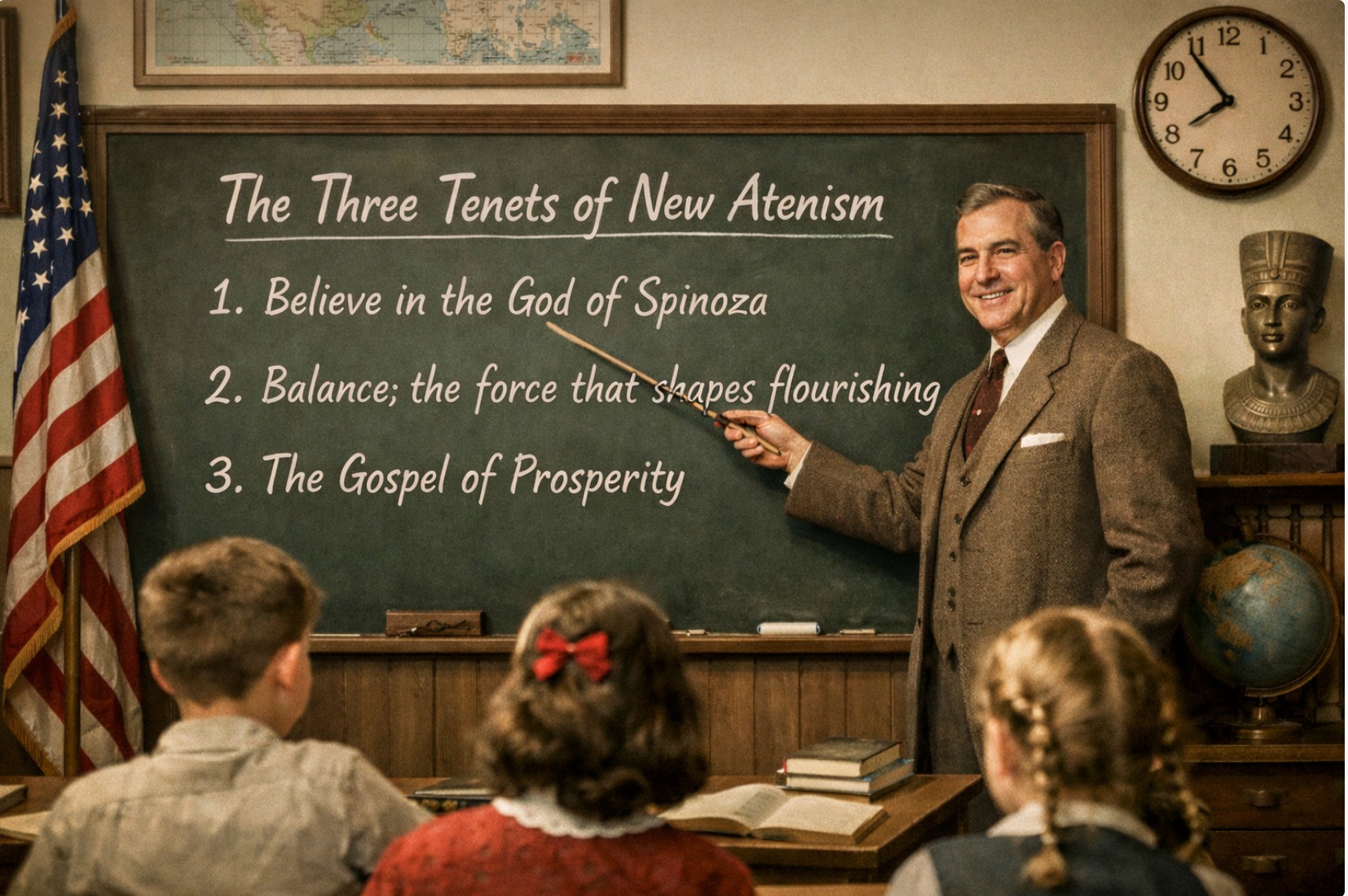
The Three Tenets of New Atenism
In previous posts we discussed how New Atenism’s core narrative integrates cosmological and moral ideas based upon what we know, what reason has revealed to be most likely. In this week’s post, we’ll expand that core out into The Four Tenets of New Atenism.
The First Tenet of New Atenism: Believe in the God of Spinoza
“I believe in Spinoza’s God who reveals himself in the harmony of what exists, not in a God who concerns himself in the fates and actions of human beings.” – Albert Einstein
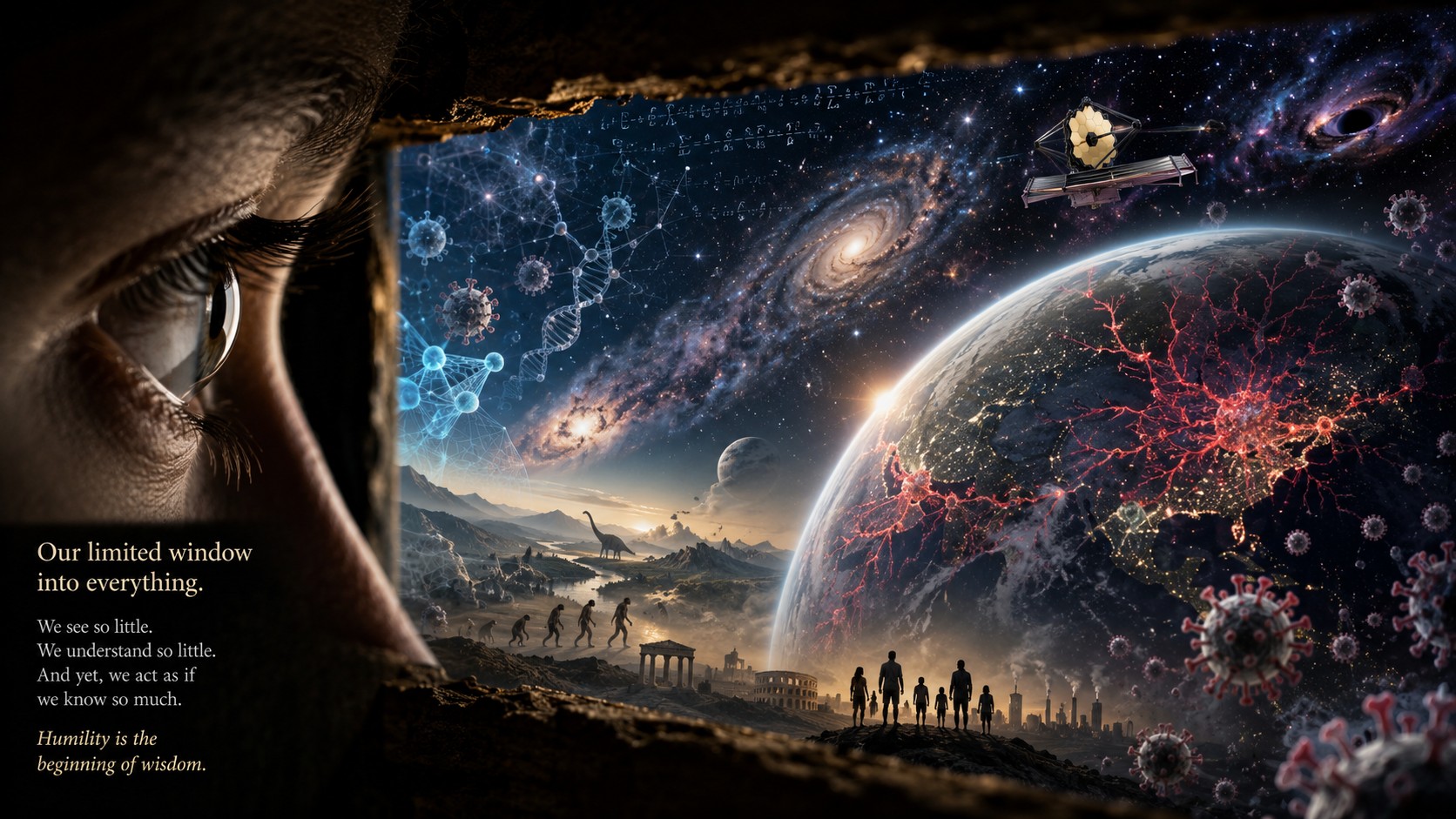
Baruch Spinoza was a 17th-century Dutch philosopher. His Einstein-approved definition of God was simply “Deus sive Natura” (God or Nature). While the Latin word “Natura” Spinoza used directly translates to “nature” our understanding of nature is often far narrower. While we might think of nature as being the natural world, all those flowers, stars and otters we can see, Spinoza’s “Natura” was much, much more than this. To Spinoza, nature includes all matter, energy, natural laws[1], knowledge, and concepts that ever existed or ever will exist. Spinoza further defined Nature/God as having “infinite attributes,” of which we humans are able to perceive only two: thought (mind) and extension (matter and natural laws).
In short, when Spinoza said “Natura” he meant everything, all that we are able to perceive and all that lies beyond our powers of perception and/or beyond our ability to comprehend. By acknowledging there may be other methods of perception, Spinoza left the door open for an infinite number of things which are currently unknown, or will forever remain unknown or unknowable, to us. New Atenism uses “Nature” with a capital “N” to distinguish this all-encompassing definition of the word from the one found on packages of cookies at Whole Foods. This doesn’t imply mysticism or magic—Spinoza firmly rejected supernatural explanations—but it does reflect his deep intellectual humility: a recognition that our finite minds can perceive only a sliver of an infinite, rational whole.
Believers often adopt what they see as a reasonable position along the lines of “since science and reason can’t give me an answer, I’ll stick with the one in my favorite interpretation of a particular religious text.” The problem with this is that the stories religion and mythology developed to explain unknowns have a terrible track record of building any sort of evidentiary bridge to reality. In fact, what happens far more often is a competing idea emerges which builds up a strong enough evidentiary bridge to replace the mythological explanation. Spinoza’s “God/Nature” is on solid ground in that it relies only upon accepting that there is such a thing as everything there is, was or ever will be, all that is known and all that is unknown.
Certainly, believing in the existence of things for which there is an evidentiary bridge is reasonable enough–but doesn’t religion require worship and awe of the sacred and divine? What’s divine or sacred about reason? If the only path to learning about God is reason, then reason is both sacred and divine. What could be more sacred than building a better understanding of God? What could be more awe-inspiring than learning a new, true piece of God? To accept the God of Spinoza is to understand that true divine revelation is accomplished only through reason.
The Second Tenet of New Atenism: Balance; The Force That Shapes Flourishing
In New Atenism, the Second Tenet flows directly from the first: we are expressions of Nature, sustained by forces far larger than ourselves. The question is not whether forces shape us. They do. The question is whether we understand them well enough to live in balance with them.
The most obvious example is the Sun.

The Sun (Aten) radiates energy outward in staggering abundance. Without it, life would not exist. Yet too much solar radiation would sterilize the planet. What makes flourishing possible is not the mere presence of energy, but its regulation. Earth’s magnetic field, atmosphere, and orbital position filter, buffer, and distribute that energy into a range compatible with life. Between solar fury and frozen darkness lies a narrow band of balance where complexity can arise.
This pattern repeats at every scale.
Inside our cells, metabolic processes must be tightly regulated. Too little energy and the cell dies. Too much oxidative stress and it self-destructs. In ecosystems, predator and prey populations oscillate toward equilibrium. In economies, too little risk leads to stagnation; too much leads to collapse. In our personal lives, stress can sharpen us, but chronic overload breaks us. Flourishing emerges not from eliminating force, but from calibrating it.
The Second Tenet invites us to recognize that flourishing is always shaped by forces — physical, biological, psychological, social — and that wisdom consists in balancing them rather than pretending we can escape them.
This is where New Atenism parts ways with both naïve optimism and fatalistic resignation. We do not worship raw power. Nor do we seek to extinguish it. We seek to understand it.
Consider human psychology. As Jonathan Haidt’s rider-and-elephant metaphor suggests, our emotional instincts (the elephant) are powerful drivers of behavior. Suppressing them entirely is neither possible nor desirable. But allowing them to run unchecked leads to tribalism, rage cycles, and self-sabotage. Flourishing requires institutions, norms, and habits that channel instinct into constructive ends. The force remains; its direction changes.
The same applies to technology. Social media algorithms amplify whatever captures attention — outrage as easily as insight. The force is engagement. The question is how it is shaped. If reasoned discourse becomes valued and demanded, the incentives will shift accordingly. The Tenet therefore has a civic dimension: we are called not only to manage our own internal forces, but to help design systems that balance collective ones.
Even morality fits this framework. Compassion without boundaries becomes burnout. Discipline without mercy becomes cruelty. Freedom without responsibility becomes chaos. Responsibility without freedom becomes tyranny. The art of flourishing lies in dynamic equilibrium.
Importantly, balance does not mean stasis. Nature is not static; it is a dance of competing pressures. The Earth’s climate system fluctuates. Populations rise and fall. Human societies cycle through innovation and correction. Balance is an ongoing adjustment — a continual recalibration informed by evidence and humility.
In New Atenism, this Tenet carries both descriptive and prescriptive force. Descriptively, it recognizes that all thriving systems operate within tolerances. Prescriptively, it calls us to act as stewards of those tolerances. We must learn which forces we can modulate, which we must adapt to, and which we must guard against amplifying beyond sustainable limits.
Flourishing is never accidental. It is the product of forces brought into proportion.
To balance the force that shapes flourishing is to live consciously within that proportion — aligning ourselves, and our institutions, with the narrow but powerful band where life not only survives, but thrives.
The Third Tenet of New Atenism: The Gospel of Prosperity
If you recoil at the term “prosperity gospel”, it’s probably because you saw some blow-dried marshmallow on TV claiming God wanted him to have a yacht or another Rolls Royce. The “if you give me your money, it will make God so happy that he’ll give you money” pitch is a clever, but morally bankrupt, manipulation of our greed urge. New Atenism is appropriating this term from these charlatans, because prosperity should be for everyone, not just TV preachers and their faithful contributors. As stated above, it is reason that creates the knowledge that drives the progress that delivers prosperity to humanity. New Atenism’s Gospel of Prosperity is a virtuous circle of reason, knowledge, progress and belief in reason. The good news of the Gospel of Prosperity is that the more you employ reason in your life, the more you’ll prosper; and the more you support its collective use, the more humanity will prosper. By spreading prosperity to more and more people we will make them more open to believing in the power of reason as they see how it has benefited them. As belief in the power and process of reason increases, the circle begins anew (figure 1).
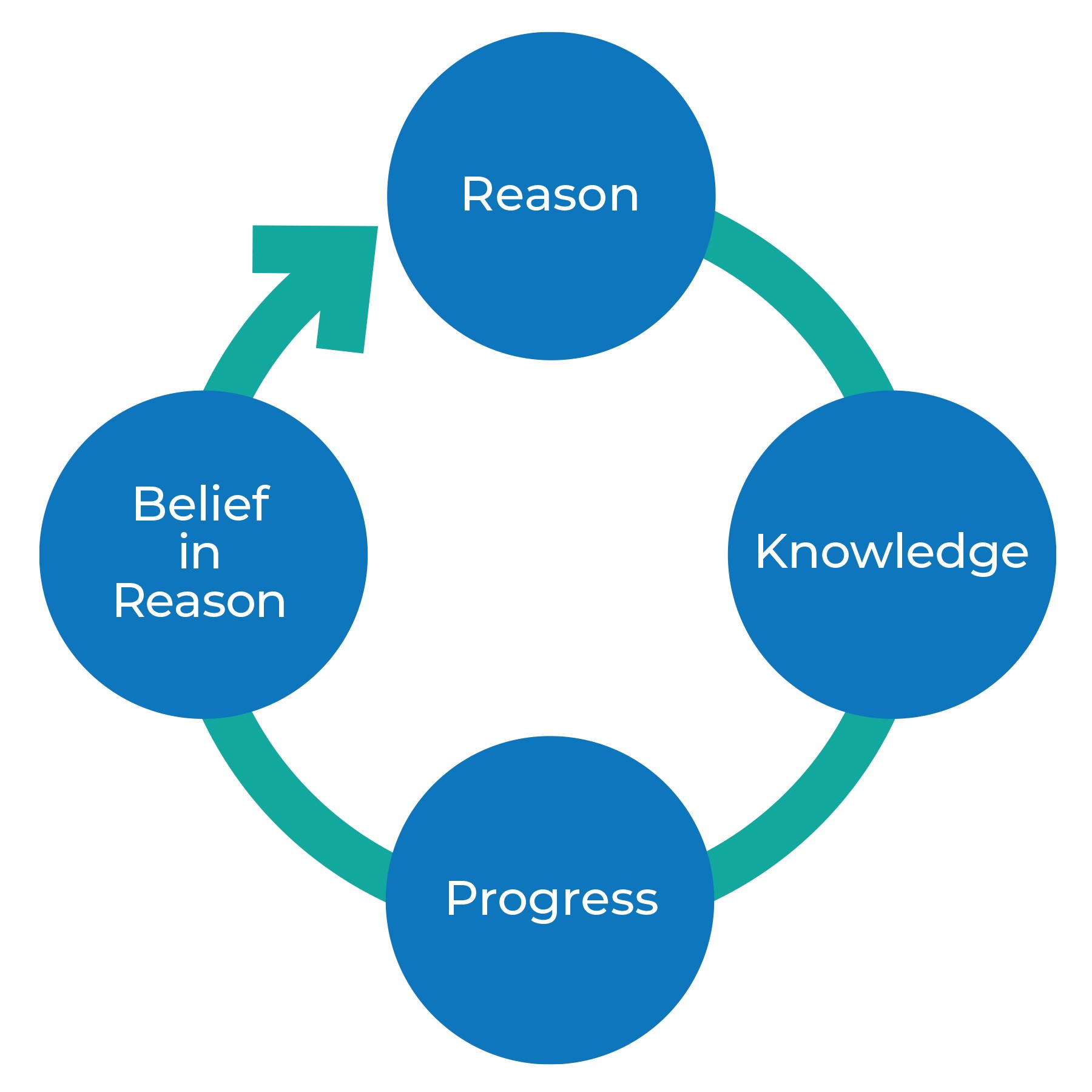
Figure 1: The Gospel of Prosperity’s Virtuous Circle
Embracing the Gospel of Prosperity requires managing a number of powerful human urges including scarcity and negativity biases, greed and entitlement. It also requires embracing positive instincts like compassion, gratitude and humility. You must shun the negativity bias that denies human progress. You must believe that we are not in a zero-sum game where the only way to lift some boats is to sink others. You have to be humble about the level of your own knowledge and awed and grateful for the blessings of progress the power of reason has provided. You must commit yourself to doing what you can to spread those benefits to others and forge the connection between reason, progress and prosperity. In this book, I will be making reasoned, evidence-based arguments which support all these aspects of the Gospel of Prosperity.
While no part of the Gospel of Prosperity is easy, perhaps the most difficult is convincing others that their prosperity is a product of the power of reason rather than an entitlement, divine intervention or their own magnificence. As described in the book, New Atenism refers to these free riders of reason as “Followers.” Getting Followers to believe in the power of reason is hard because of how people come to believe things and how tenaciously they hold on to those beliefs–that whole hot reason/elephant thing. Telling them they’re wrong or stupid is not an effective method of getting them to question those beliefs. Showing them how reason can facilitate their personal progress, however, just might set them on the path to becoming a Seeker.
The Gospel of Prosperity is not a commandment, it is an invitation to embrace reason to prosper in your own life and to share that prosperity with others. Reason brings progress and prosperity to each of us and all of us. Live in the spirit of reason and you will progress individually. Support the power of collective reason and we will continue our amazing progress as a species. Venerate Aten for its power made life-giving by near-Earth space’s embrace of the helpful and rejection of the harmful. Resolve to do what you can to apply the power of collective reason to resolve the conflict between progress and that balance so that life continues to thrive in the biosphere. In my next post I’ll take a deeper dive into New Atenism’s first tenet, belief in the God of Spinoza.
[1] Spinoza actually used “forces of nature” rather than “natural laws” as “Ethics” was published ten years prior to Isaac Newton’s “Philosophiæ Naturalis Principia Mathematica.”
[2] There are those who argue that Einstein’s former math professor, Hermann Minkowski, was thinking about relativity around the same time, Einstein published his theory of special relativity in 1905. Minkowski later provided a mathematical framework for this theory in 1908, which helped to solidify and extend its implications.
[3] “Aten” is a noun that means disk or sphere but carvings from the period make it clear that Akhenaten meant sphere.
[4] With apologies to our chemosynthesis practicing brothers and sisters living in deep sea hydrothermal vents
[5] “The Constitution of Knowledge” – Jonathan Rauch Brookings 2021