The Truly Infinite God of Spinoza
An imaged conversation with renowned atheist Ricky Gervais:
RG: “I don’t believe in God.”
Me: “Do you believe there is such a thing as everything?”
RG: “Sure, but so what?”
Me: “That’s the God of Spinoza.”
Gervais is too sharp to fall for it. He immediately sees the move for what it is: “That’s just a rhetorical sleight of hand, redefining ‘God’ to mean everything. We have a perfectly good word for everything so why not just use that?”
He would have a point. It isn’t all that interesting or clever to simply move the definitional goal posts to something someone believes in and then shout “Aha! You do believe it God!”
For this argument to hold water, holy or otherwise, the definition of God as everything needs to be supported. For that we turn to Spinoza.
Spinoza didn’t argue for a supernatural being. He didn’t defend miracles or sacred texts as sources of truth. Instead, he made a move so simple — and so radical — that it still unsettles people today:
God is everything that exists.
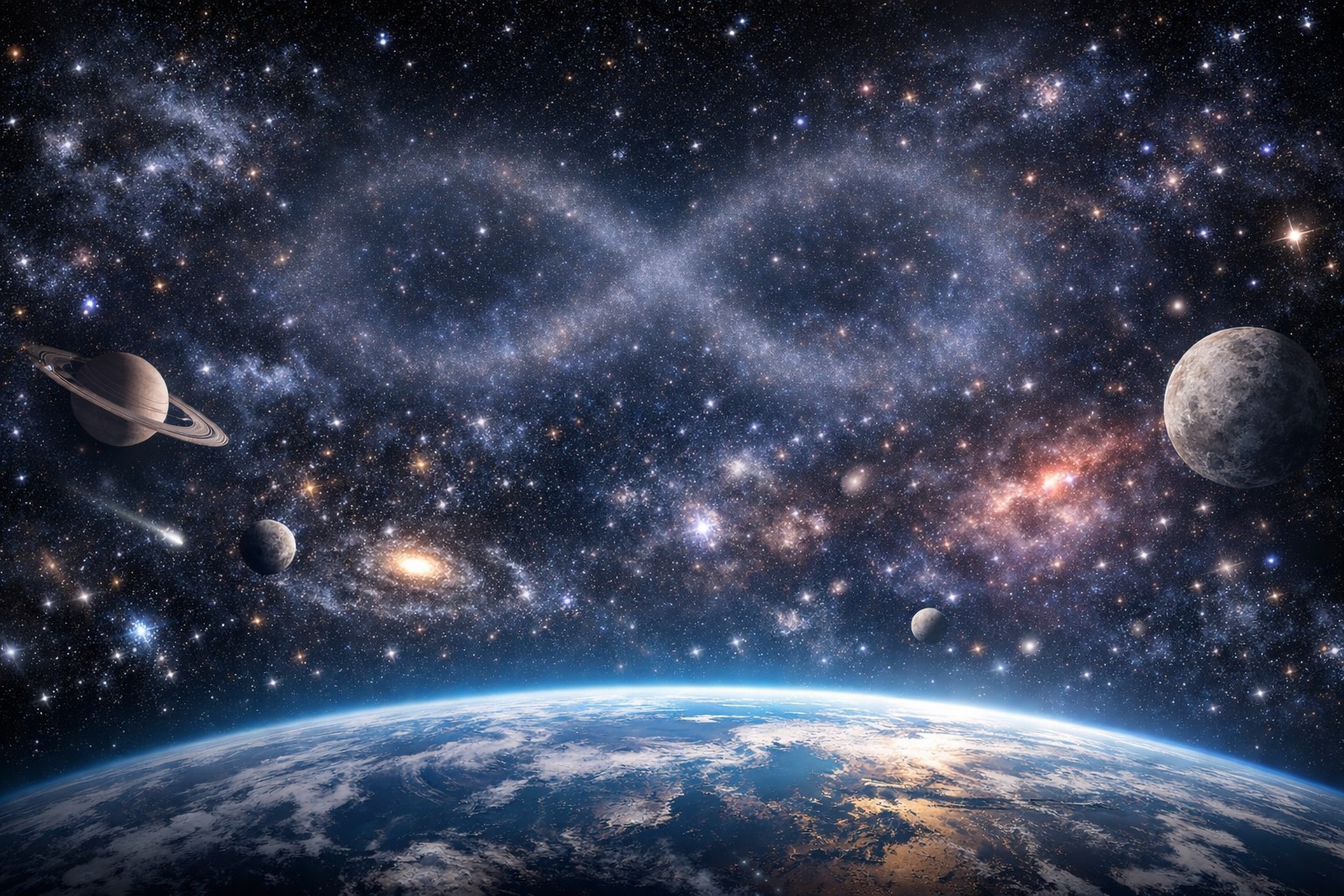
Not just the natural world we see, but the totality of existence:
- Everything we can observe
- Everything we can infer
- Everything we cannot yet perceive or comprehend
- Everything that could possibly exist
Spinoza called this Deus sive Natura — “God or Nature.”
In modern terms, this is capital-N Nature: not just forests and oceans, but the full, unbounded totality of existence.
An Infinite Intellect Changes Everything
Spinoza argued that God has infinite attributes, of which we perceive only two:
- Thought
- Extension
If thought is an attribute of Nature, then every idea that has ever been conceived is part of existence.
- Scientific theories
- Philosophical arguments
- Religious beliefs
- Conspiracy theories
- Ideas beyond our ability to imagine
- Every God idea.
The confusion comes from the word “reality,” which we use in two different ways. In everyday language, reality means how things actually are — what is true. But in a broader philosophical sense, it can also mean everything that exists.
To avoid this confusion, I follow Spinoza in using Nature, with a capital N, to refer to the totality of existence — everything that is, including our thoughts and beliefs, whether true or false.
Reality, by contrast, is our current best explanation of what is true about Nature.
A false belief is part of Nature, but it is not part of reality.
If the only difference is that Nature includes false beliefs, why bother making the distinction? Who cares about stuff that isn’t true?
Anybody who is interested in human flourishing, that’s who.
Progress works like this: we develop beliefs — called theories in science — and then try to break them. Most fail. Some survive. Over time, we build better and better bridges between our ideas and reality.
Now here’s the kicker: If Nature is everything that ever has or ever will exist, all that we know, all that we don’t know and all that lies beyond our ability to perceive or understand, then it must include every idea about God any human has ever had or ever could have.
Ricky Gervais, as well as many other atheists, are fond of the “one God more” argument. They will often say to people of faith something like “You’re an atheist when it comes to Thor, Zeus and the Flying Spaghetti Monster, I just go one God more.”
I would reframe this not as an argument, but as a statement:
“There are many, many different God ideas in Nature. Some of these ideas have facilitated alignment among groups of people but none of them have enough evidentiary support to be considered aligned with reality.”
A God Big Enough to Contain All Gods
This leads to a remarkable conclusion:
Every God idea exists within God/Nature.
That includes:
- The personal, intervening God of scripture
- The deist creator
- The mystical ground of being
- The atheist rejection of all of the above
All of these are ideas — and ideas exist.
But here’s the crucial point:
How do we determine which God ideas are more closely aligned with reality?
Reason.
From Belief System to Meta-Study
Most religions:
- Define God
- Defend that definition
- Reject alternatives
Spinoza did something entirely different.
He created a framework where all God ideas can be evaluated using reason. Spinoza’s God is a meta study, putting every God concept into reason’s culture of criticism to form the most accurate picture of the divine.
This transforms theology into something closer to science.
- Ideas enter the system
- They are tested and challenged
- The strongest survive
Reality as a Moving Target
This is where the “current best explanation” becomes essential.
Reality is not fixed.
Reality is our current best explanation of what is true about existence — always subject to revision.
This preserves:
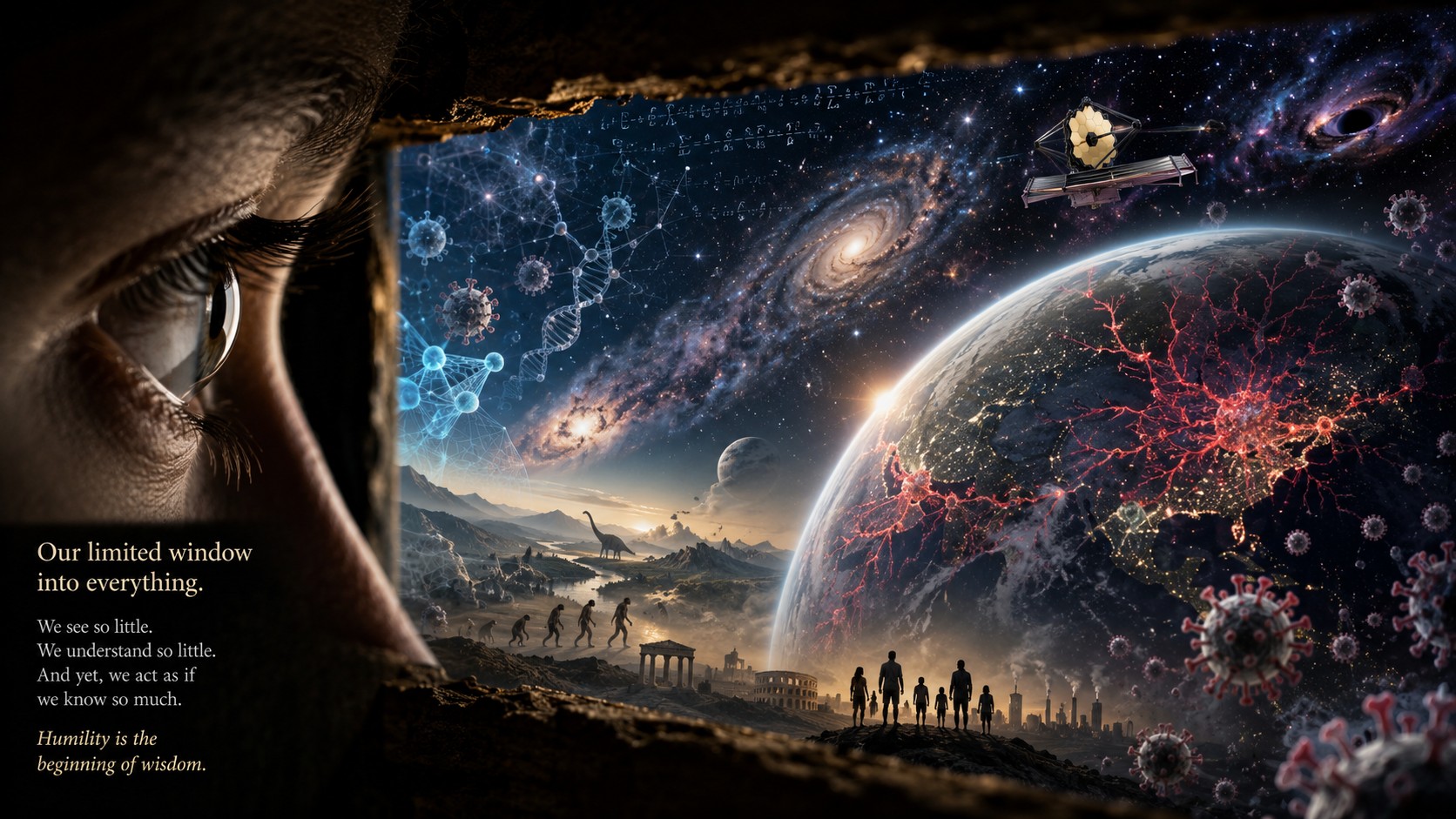
- Humility (we see only a fraction of existence)
- Progress (knowledge improves over time)
- Flexibility (today’s truth may be refined tomorrow)
Or more simply:
Reality is a moving target, refined by reason.
When atheists like Gervais say they don’t believe in God, they are rejecting a very specific kind of God — a supernatural, personal agent with intentions and judgments. But that is only one among many God ideas. Monotheism, polytheism, deism, and pantheism are all forms of theism, each describing very different kinds of “God.”
The real disagreement isn’t about whether something exists. It’s about which concept, if any, deserves the word “God.”
It’s one thing to say “I don’t believe the God you describe exists” and quite another to say “What you describe as God doesn’t meet the standard.”
What you can say is “You can call that God, but I wouldn’t.”
That’s a coherent position.
Now the conversation becomes “Here’s why I think you should call it ‘God’.”
The word God carries something Nature, existence and the totality of reality don’t:
- Historical weight
- Emotional resonance
- Moral significance
- The ability to align large groups of people
For thousands of years, “God” has been one of humanity’s most powerful organizing ideas.
Spinoza didn’t discard that.
He re-grounded it in existence itself.
Sorting Wheat from Chaff
Once you adopt this framework, every God idea becomes:
- A hypothesis
- A model
- A claim about existence
And like all claims, they can be evaluated.
Even when direct evidence is limited, we can assess:
- Coherence
- Consistency
- Plausibility
And importantly impact:
God ideas can:
- Unite people
- Promote flourishing
- Encourage cooperation
But they can also:
- Divide
- Justify harm
- Resist correction
One Story More
If all ideas exist within Nature, then stories — religious or otherwise — are not literal truths, but partial glimpses of that totality. Human flourishing has largely been accomplished by uniting around ideas, around stories. Divisions occur when two groups align behind conflicting stories they hold as literal truths. You can embrace a story, unite, flourish and cooperate without creating division by simply, and humbly acknowledging that your story is not literally true and other stories also have value.
A person of faith can read Greek or Norse myths, “Zen and the Art of Motorcycle Maintenance” or watch a Star Wars movie and extract moral truths and lessons – an atheist can add holy texts to that list — but all of them see these stories are part of a cosmic whole, an ever-unfolding everything. None of these imperfect glimpses of Nature tell our whole story, and none of them tell a literal story, but they all can be appreciated for how they touch the human heart and foster community, comfort and love.
A Truly Infinite God
A traditional “infinite” God is often still limited:
- Defined by specific traits
- Bound to a particular story
- Protected from criticism
Spinoza’s God is different.
It includes:
- The known
- The unknown
- The unknowable
- Every attempt to describe any of the above
It is:
- Maximally inclusive
- Epistemically humble
- Continuously revealed through reason
So where does this leave us?
Not with a “gotcha.”
But with a reframing.
I’m not trying to convince you that something extra exists.
I’m suggesting that what already exists might be worthy of the word “God.”
I’m saying we should shift the debate from “Does God exist?” to “Should existence itself be understood—and perhaps even revered—as God?”
The Fork in the Road
At the edge of knowledge, we face a fork:
- One path continues through reason, evidence, and revision
- The other branches into speculation and belief
Spinoza doesn’t forbid exploration.
He simply insists we don’t mistake speculation for reality until it earns its place as our current best explanation. You don’t have to believe in something more to believe in Spinoza’s God — you only have to take seriously what already exists.
Bottom Line
If God is truly infinite, then:
- Everything that exists is part of God
- Every idea of God is part of God
- Every attempt to understand reality is part of God
But reality is our current best attempt to correctly describe that totality and reason — the slow, collective, self-correcting process — is how we improve that description over time.
So, the question is no longer:
Does God exist?
It becomes:
Is existence itself worthy of the word “God”?