Feasts of Reason: How Science Becomes a Bridge Where Politics Fails — The Zafra Lerman Story
When I interviewed Raphael Cohen-Almagor he described how decades of negotiations between Isreal and the Palestinians have failed to achieve a lasting peace. So often politics hardens into sharpened identities and calcified positions. In those moments, the usual tools of diplomacy — negotiation, compromise, leverage — typically fail. Not because they are poorly designed, but because they depend on something that has disappeared: trust.
And yet, in the midst of some of the most entrenched geopolitical conflicts in the world, there are pockets of genuine cooperation. Scientists from countries that refuse to recognize each other politically meet, collaborate, and even become friends. They share data, challenge each other’s ideas, and work toward common goals.
This is not accidental. It is not naïve idealism. It is a different kind of diplomacy altogether — one grounded not in power or persuasion, but in the shared process of reason.
Few people embody this better than Zafra Lerman.
A Chemist in the Middle of Conflict
Zafra Lerman is not a diplomat in the traditional sense. She is a chemist. Her training is in the hard sciences — fields where claims must be testable, evidence must be shared, and ideas must survive criticism.
Her amazing life story, told In her new book, “Human Rights and Peace,” at times reads like a John Carré spy novel, with her sneaking around the backstreets of cold war Moscow to help dissidents defect. Her career and credentials as a chemist provided a back door into countries whose front door is always locked and guarded. This allowed her to do things professional diplomats could not: bringing together scientists from deeply divided regions — most notably the Middle East — into sustained, productive collaboration.
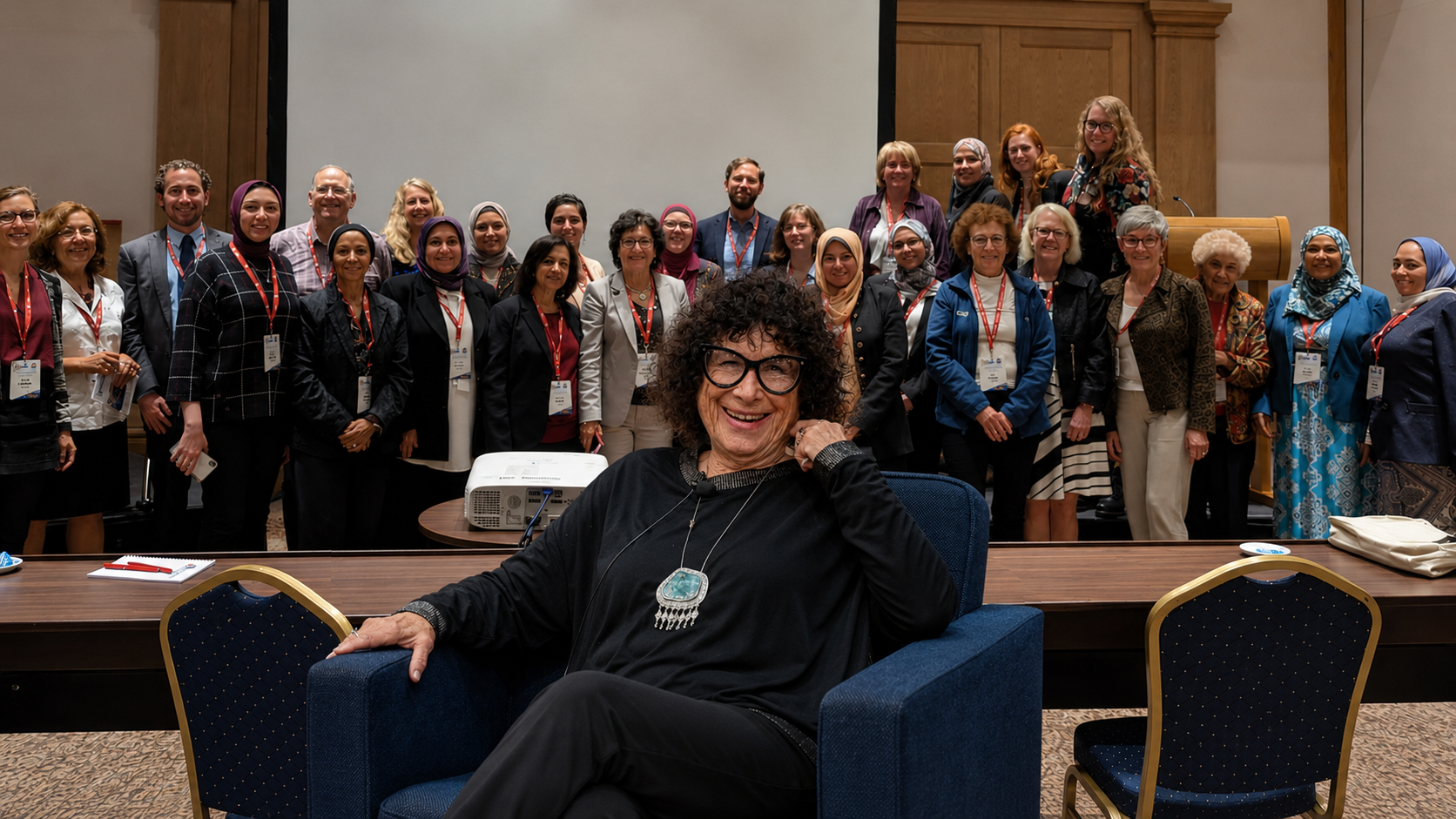
Through initiatives like the Malta Conferences, Lerman helped create a space where Israeli, Palestinian, Iranian, Jordanian, and other scientists could meet — not as representatives of opposing political identities, but as participants in a shared epistemic process.
That distinction matters.
Because what she built wasn’t just a meeting. It was a system.
The Hidden Architecture of Science Diplomacy
At first glance, “science diplomacy” can sound like a branding exercise — another well-meaning attempt to use a neutral domain (science) as a soft entry point for political dialogue.
But what Lerman’s work reveals is something deeper: science is not just neutral ground. It is structured ground. It comes with rules — rules that, when followed, change how people interact.
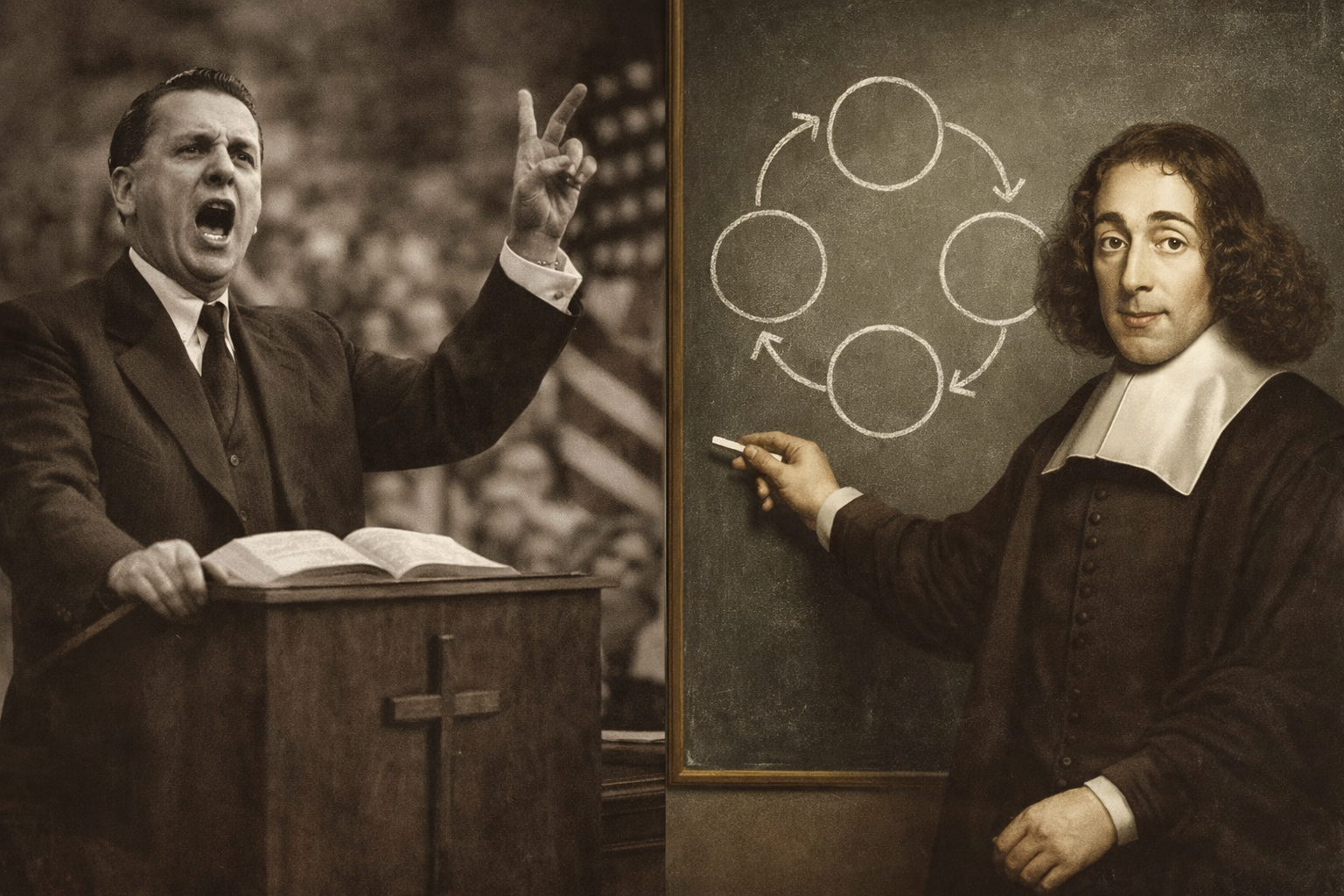
To understand why this matters, it helps to contrast two very different kinds of conversation:
Political discourse
- Identity-driven
- Outcome-oriented
- Resistant to error correction
- Incentivized to persuade rather than discover
Scientific discourse
- Problem-driven
- Process-oriented
- Built around error detection
- Incentivized to challenge and refine ideas
In political settings, disagreement is often a threat. In scientific settings, disagreement is the engine of progress.
That difference is everything.
From Identity to Inquiry
One of the most powerful aspects of Lerman’s approach is that it shifts the frame of interaction.
When two individuals meet as political actors, they carry the full weight of their identities: nationality, religion, history, grievance. Every statement is filtered through those lenses. Every disagreement risks escalation.
But when those same individuals meet as scientists, something remarkable happens: the focal point moves from who you are to what you’re trying to understand.
The question is no longer, “Whose side are you on?”
It becomes, “What does the evidence say?”
This is not to suggest that identity disappears. It doesn’t. But it becomes secondary — background noise rather than the central signal.
And that shift opens a door.
The Process Is the Trust
Traditional diplomacy often tries to build trust first, in the hope that cooperation will follow.
Science diplomacy flips that sequence.
It starts with a shared process — one that requires transparency, reproducibility, and critique. Participants must show their work. They must expose their ideas to scrutiny. They must accept that they could be wrong.
This structured vulnerability facilitates the humility required to engage minds collectively and get as close to the truth as humanly possible.
And over time, something subtle but profound happens: trust emerges — not as a prerequisite, but as a byproduct.
You begin to trust not just the person, but the process that governs the interaction.
This is a crucial distinction.
Because interpersonal trust can be fragile. It can be broken by a single perceived betrayal. But trust in a process — especially one that is explicitly designed to detect and correct errors — is far more resilient.
It does not depend on goodwill. It depends on shared rules.
The Culture of Criticism
This is where Lerman’s work aligns closely with what Jonathan Rauch calls the “constitution of knowledge” — the set of norms and institutions that allow societies to produce reliable knowledge through public criticism.
In this framework, no idea is above challenge. No authority is beyond question. Progress comes not from consensus, but from the continuous testing and refinement of competing claims.
Lerman didn’t just bring scientists together. She brought them into this culture.
And that matters because it changes the incentives.
In political environments, the incentive is often to defend your position at all costs. Admitting error can be seen as weakness.
In scientific environments, the incentive is reversed. The faster you identify and correct errors, the stronger your work becomes.
This creates a dynamic where participants are not trying to “win” the conversation. They are trying to improve the explanation.
That is a very different game.
A Platform for Humanization
In our podcast conversation, one of the most striking themes was Lerman’s emphasis on giving participants a platform to “see what unites them, not what separates them.”
This is often framed in moral or emotional terms — and those dimensions are certainly present. But there is also a cognitive dimension that is just as important.
When individuals collaborate on a shared problem, they begin to build a shared model of reality.
They may still disagree on many things. But they agree on enough — methods, standards of evidence, definitions — to make progress possible.
And in doing so, they start to see each other not as abstract representatives of a group, but as contributors to a common endeavor.
This is humanization through participation.
It is not achieved through persuasion or empathy alone, but through joint engagement in a structured process.
The Limits — and Power — of Reason
It would be easy to overstate the case here. Science diplomacy does not resolve geopolitical conflicts. It does not eliminate deep-seated grievances or structural inequalities.
Lerman herself would be the first to acknowledge this.
But that’s not the point.
The point is that it creates islands of cooperation in otherwise hostile environments. It demonstrates that collaboration is possible — even when political systems are at odds.
And perhaps most importantly, it provides a proof of concept:
That human beings, when given the right framework, can transcend identity-driven conflict and work together toward shared goals.
This is not utopian. It‘s empirical.
Reason as a Diplomatic Technology
If we zoom out, what Lerman has done can be seen as an application of something broader: reason itself as a kind of technology.
Not in the sense of individual rationality — the idea that each person can, through sheer willpower, overcome bias and arrive at truth. That view has been challenged by thinkers like Daniel Kahneman, who showed how deeply our thinking is shaped by intuition and cognitive shortcuts.
Rather, this is collective reason — a system in which individuals, each with their own biases and limitations, participate in a process that filters and refines ideas over time.
In this system:
- Individuals propose ideas
- Others critique them
- Evidence is gathered and shared
- Errors are identified and corrected
No single participant needs to be perfectly rational. The system itself does the work.
This is what makes it so powerful — and so transferable.
From the Lab to the World
The implications of this extend far beyond international diplomacy.
If the principles of scientific discourse can enable cooperation in regions of deep conflict, what might they do in other domains where polarization is high?
- Political discourse in democratic societies
- Cultural and ideological divides
- Even interpersonal conflicts
I’m not suggesting that every conversation must conform to the rules of scientific debate. That would be impractical and likely cause all your party invitations to vanish.
What we can do is adopt process of reason norms:
- Openness to criticism
- Willingness to revise beliefs
- Focus on shared problems
- Commitment to evidence
These are not just scientific values. They are civic values.
And in a world where information ecosystems increasingly reward outrage and certainty, they are more important than ever.
The New Atenist Lens
From the perspective of New Atenism, Lerman’s work can be seen as a powerful example of what happens when thought is successfully brought into extension.
The idea that reason can bridge divides is not new. It exists in the thought domain — philosophically compelling, intuitively appealing.
But without evidence, it remains just that: an idea.
What Lerman has done is provide extension — real-world instances where this idea has been tested and shown to work.
Not perfectly. Not universally. But meaningfully.
And in doing so, she strengthens the bridge between thought and reality.
This is The Cycle of Human Flourishing in action:
- Reason generates ideas
- Ideas are tested in the world
- Successful applications build trust in reason
- That trust fuels further inquiry and progress
It is a virtuous cycle — but only if we continue to participate in it.
A Quiet Counterpoint to Cynicism
We live in a time when cynicism is easy.
It is easy to believe that people are too divided, too tribal, too entrenched to find common ground. It is easy to see every attempt at cooperation as naïve or doomed.
But Lerman’s work offers a quiet counterpoint.
Not a grand solution. Not a sweeping theory.
A demonstration.
That under the right conditions, with the right structures in place, people can do something remarkable:
They can disagree, challenge each other, and still collaborate.
They can bring their full identities into the room — and not be defined by them.
They can participate in a process that is bigger than any one of them.
And in doing so, they can build something that politics alone often cannot:
A shared understanding of the world.
The Invitation
The lesson here is not that we should all become scientists or diplomats.
It is that the principles underlying science diplomacy — the norms of collective reason — are available to all of us.
Every conversation is, in a small way, an opportunity to choose:
- Do we defend our identity, or explore a question?
- Do we seek to win, or to understand?
- Do we treat disagreement as a threat, or as a tool?
These choices shape not just individual interactions, but the broader culture in which we live.
Zafra Lerman has shown what is possible when we get those choices right at scale.
The question is whether we are willing to apply those lessons more widely.
Because if we are, the implications go far beyond diplomacy.
They point toward a world where reason is not just a method of inquiry, but a foundation for coexistence.